Grieks aan de UGent
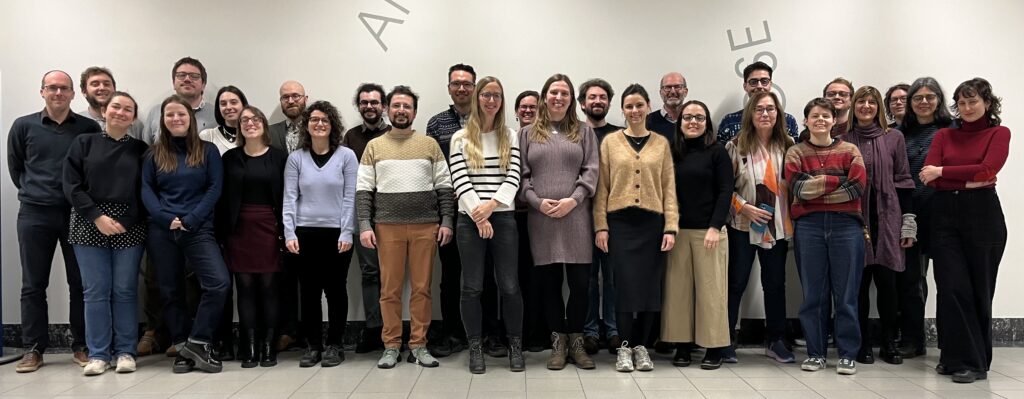
De afdeling Grieks van de Universiteit Gent beschouwt de Griekse taal en literatuur als een bron van inspiratie die zichzelf voortdurend vernieuwt. We benaderen Griekse taal- en letterkunde zo ruim mogelijk, zowel in tijdskader als in vraagstelling: Homerische metriek, plotstructuren in de antieke liefdesroman, Byzantijnse inscripties, … het behoort allemaal tot ons interesseveld. Welkom op onze site!
Nieuws en activiteiten van onze afdeling kan je op de voet volgen via sociale media: facebook, Instagram en YouTube.
Voor toekomstige studenten
- Praktische informatie: Grieks aan de UGent, wat houdt dat in?
- Zomercursus: Grieks aan de universiteit, is dat iets voor mij?
- Onze opleiding: Welke vakken kan ik tijdens mijn studies zoal studeren?
- Baanbrekend onderzoek: Hoe kan ik als student deelnemen aan het onderzoek van de afdeling?
- Het studentenleven: Aan welke leuke activiteiten kan ik deelnemen?
- Zit je met vragen? Email grieks@ugent.be
Agenda
-
Woe06Mei202619:30Leslokaal 0.4 (Blandijnberg 2, 9000 Gent)
Eline Daveloose, Tussen Turkije en Griekenland: de odyssee van het Cappadocisch Grieks
Griekenlandcentrum, lezing, publiek evenementToon detailsVoorsmaakje
Wat gebeurt er wanneer talen langdurig met elkaar in contact komen? Hoe komen volkeren elkaar tegemoet zonder hun eigenheid en eigen taal te verliezen? Wat blijft er overeind, wat verandert, en hoe diep kan invloed van de ene taal op de andere gaan? Het Cappadocisch Griekse dialect vormt een uitstekende case study om deze vragen onder de loep te nemen. Deze kritisch bedreigde, bijna uitgestorven variëteit van het Grieks is het product van een eeuwenlange intense contactsituatie in de Turkse streek Cappadocië, waar Griekstalige gemeenschappen intens in contact stonden met Turkstaligen. Het resultaat hiervan is een Nieuwgrieks dialect dat doordrenkt is van Turkse invloeden: niet alleen op het niveau van klanken en woordenschat, maar ook in minder voor de hand liggende grammaticale constructies.
Hoewel het bronnenmateriaal voor de meeste Cappadocische subdialecten zeer schaars is – veel ervan zijn inmiddels volledig uitgestorven – hebben de bewaarde teksten een opmerkelijke rijkdom aan contactfenomenen overgeleverd. Ze tonen onder andere hoe tweetalige Cappadociërs erin slaagden om typisch Turkse grammaticale structuren te kopiëren en na te bootsen met uitsluitend Griekse bouwstenen, vaak zonder ook maar één Turks woord te gebruiken. Dit proces staat in de taalkunde bekend als structurele ontlening of pattern replication.
In deze presentatie bespreek ik drie concrete gevallen van zulke grammaticale ‘nabootsing’: het gebruik van het additief partikel ke ‘en, ook’ als topic shift marker, toegevend-voorwaardelijke bijzinnen, en de structuur van betrekkelijke bijzinnen. Samen illustreren ze hoe taalcontact niet alleen leidt tot het overnemen van leenwoorden, maar ook tot diepgaande typologische shifts in de grammatica wanneer volkeren en talen de dialoog aangaan.

Over de spreker

Na haar studies aan de UGent startte dra. Eline Daveloose een doctoraat in de Griekse taalkunde. In haar onderzoek verdiept zij zich in het Cappadocisch Grieks, een bijna uitgestorven dialect dat zeer sterk beïnvloed werd door het Turks. Naast haar academisch werk aan de UGent staat zij sinds dit schooljaar ook voor de klas als leerkracht Grieks en Latijn.
Praktische informatie
Wanneer? woensdag 6 mei 2026, om 19u30
Waar? leslokaal 0.4 (Blandijnberg 2, 9000 Gent)
Prijs? gratis voor leden van het Griekenlandcentrum, UGent studenten (m.u.v. PhD-studenten) en scholieren. Anderen betalen €5 aan de kassa.
-
Din26Mei2026Woe27Mei202609:00University Library (Leiden University)
Crash Course in Greek Palaeography 2026
OIKOS, workshopToon detailsThe ERC project Ancient Corrections (AnCor) organizes a two-day course in Greek palaeography within the Research School OIKOS in collaboration with the Leiden University Centre for Arts in Society, Leiden Papyrological Institute, Leiden University Library and the Greek department of Ghent University. The course is intended for MA, ResMA and doctoral students in the areas of Classics, Ancient History, Ancient Civilizations and Medieval studies with a good command of Greek. It offers a chronological introduction into Greek palaeography from the Hellenistic period until the end of the Middle Ages and is specifically aimed at acquiring practical skills for research involving literary and documentary papyri and/or manuscripts. This course gives the unique opportunity to practice reading on original papyri and manuscripts from the collection of the Leiden Papyrological Institute and the special collections of the Leiden University Library.
Programme
The course is set up as an intensive two-day seminar. Four lectures by specialists in the field give a chronological overview of the development of Greek handwriting, each followed by a practice session reading relevant extracts from papyri and manuscripts in smaller groups under the supervision of young researchers. After each practice session, there is the opportunity to see a selection of original papyri and manuscripts presented by scholars with firsthand experience working with these objects.
Tuesday, 26 May 2026
09:00-9:15 Introduction to the course
09:15-9:45 Introduction to papyrology – Dr. Serena Causo
09:45-11:00 Lecture on papyri of the Ptolemaic and Roman period – Dr. Joanne Stolk
11:00-11:30 Coffee break
11:30-12:30 Reading practice with papyri of the Ptolemaic and Roman period
12:30-13:00 Display of papyri in the Leiden Papyrological Institute
13:00-14:00 Lunch break
14:00-15:15 Lecture on papyri of the Byzantine period – Dr. Yasmine Amory
15:15-15:45 Coffee break
15:45-16:45 Reading practice with papyri of the Byzantine period
16:45-17:15 Display of papyri in the Leiden Papyrological Institute
19:00 Dinner
The practice and display sessions are taught by Dr. Yasmine Amory, Dr. Serena Causo, Dr. Joanne Stolk, Despina Borcea MA, Irene Chioni MA and Elise Hoekstra BA.
Wednesday, 27 May 2026
09:00-9:30 Introduction to codicology – Dr. Grigory Vorobyev
09:30-10:45 Lecture on Byzantine book scripts: From the first codices to the eleventh century – Prof. dr. Floris Bernard
10:45-11:15 Coffee break
11:15-12:15 Reading practice with Byzantine book scripts
12:15-12:45 Display of Byzantine books in the Leiden University Library
12:45-13:30 Lunch break
13:30-14:45 Lecture on Byzantine book scripts: The Comnenian and Palaeologan periods – Prof. dr. Andrea Cuomo
14:45-15:15 Coffee break
15:15-16:15 Reading practice with Byzantine book scripts
16:15-16:45 Display of Byzantine books in the Leiden University Library
The practice and display sessions are taught by Prof. dr. Paolo Scattolin, Dr. Juan Bautista Juan-López, Dr. Divna Manolova, Dr. Francesca Samori, Dr. Grigory Vorobyev, Kyriaki Giannikou MA and Eleonora Lauro MA.
Practical information
The study load is the equivalent of 2 ECTS (2x28 hours). Participants will be asked to read secondary literature in preparation for the seminar (distributed several weeks before the course). Extra material will be handed out during the course in order to continue to improve your reading skills afterwards.
There are no fees for participation in this course. Lunches on both days and dinner on the first day are provided free of charge. Travel costs and accommodation in Leiden are at your own expense.
The course will take place at the following venue: University Library (Witte Singel 27, 2311 BG Leiden).
Registration
Please register by sending an e-mail with a short motivation (max. 250 words, including your background, research interests and why you would like to follow this course) to j.v.stolk@hum.leidenuniv.nl. Priority is given to OIKOS MA and doctoral students and those who did not have the opportunity to follow course(s) on palaeography before. Registration closes by the final deadline of March 1st, 2026. Successful applicants will be notified soon afterwards.
-
Woe27Mei202619:30Leslokaal 0.4 (Blandijnberg 2, 9000 Gent)
Daniela De Simone, From Alexander to Ashoka: Encounters Between Ancient India and the Hellenistic World. A Story Told Through Textual Records and Material Traces
Griekenlandcentrum, lezing, publiek evenementToon detailsVoorsmaakje
This lecture explores the complex interactions between Ancient India and the Hellenistic world from the late fourth to the third century BCE, a period shaped by imperial ambition, cross-cultural diplomacy, and artistic innovation, and extending into the subsequent era of the so-called Indo-Greek kingdoms. Anchored in the historical arc from Alexander the Great’s incursions into northwestern India to the reign of Ashoka, third emperor of the Mauryan dynasty and first Buddhist sovereign, the talk examines how these two civilisational spheres came into contact and what material traces they left behind, and the forms of interaction that continued to shape the region in subsequent centuries. Drawing on a range of sources, including Greek diplomatic accounts, Ashokan inscriptions (including one composed in Greek), coins, monumental architecture, and sculptural forms, the lecture considers how visual and textual media were mobilised to express authority, religious ideals, and shifting geopolitical relationships. Rather than framing this encounter as a unidirectional influence, the lecture brings into focus zones of interaction, where cultural forms were exchanged, adapted, and recontextualised. Particular attention will be given to the Greek presence in India, its intersections with the spread of Buddhism, and to the hybrid iconographies that later emerged in regions such as Gandhara. Richly illustrated and interdisciplinary in scope, the lecture offers a nuanced perspective on one of antiquity’s most intriguing intercultural entanglements.


Over de spreker
 Daniela De Simone is Assistant Professor in South Asian Art and Archaeology at Ghent University, and was previously Curator for South Asian Archaeology at the British Museum. Her research focuses on the history of South Asian Buddhism through the study of material culture. She has excavated early Buddhist sites in Nepal and conducts regular fieldwork at Buddhist sites in India. She is the principal investigator of the Harvard-funded research project Excavations at Bodhgaya: the Site of the Buddha’s Enlightenment.
Praktische informatie
Wanneer? woensdag 27 mei 2026, om 19u30
Waar? leslokaal 0.4 (Blandijnberg 2, 9000 Gent)
Prijs? gratis voor leden van het Griekenlandcentrum, UGent studenten (m.u.v. PhD-studenten) en scholieren. Anderen betalen €5 aan de kassa.
! Opgelet: deze lezing wordt in het Engels gegeven !
Volledige agenda
Pers en nieuws
- Medewerker van de maand (maart 2026): Dalia Pratali Maffei
- Medewerker van de maand (februari 2026): Duccio Guasti
- Medewerker van de maand (januari 2026): Selene Evangelisti
- Medewerker van de maand (december 2025): Samuel Carreño Ramos
- Medewerker van de maand (november 2025): Francesca Samorì
- Medewerker van de maand (oktober 2025): Juan Bautista Juan López
- Medewerker van de maand (juni 2025): Maria Rosa De Luca
- Medewerker van de maand (april 2025): Marthe Nemegeer
Alle nieuws